
‘Every illicit shipment we intercepted, every peso we collected, and every system we improved was guided by one purpose. That is to serve the Filipino people with integrity, accountability, and excellence.’
Since assuming office on 1 July 2025, Bureau of Customs (BOC) Commissioner Ariel F. Nepomuceno has led the agency through a year of stronger performance, faster services, and meaningful reforms aimed at rebuilding public trust.
Guided by the administration of President Ferdinand R. Marcos Jr. to strengthen revenue generation, improve ease of doing business, and uphold integrity in government, Commissioner Nepomuceno pushed reforms that improved collections, intensified border protection, streamlined processes, expanded digital services, and strengthened accountability.
“In the past year, we not only imposed reforms, but little by little, we brought back the trust of the Filipino people in the Bureau of Customs,” Commissioner Nepomuceno said.
“Every illicit shipment we intercepted, every peso we collected, and every system we improved was guided by one purpose. That is to serve the Filipino people with integrity, accountability, and excellence. We still have a long run, but we have laid a strong foundation,” he added.
Revenue collection’s landmark surplus
Under Commissioner Nepomuceno’s leadership, the BoC sustained strong revenue performance.
From 1 July 2025 to 30 June 2026, the agency generated a preliminary P965.649 billion in revenue, reinforcing its role in funding essential government programs.
He also kept collections on track toward the BoC’s P1-trillion goal, with P491.748 billion collected in the first half of 2026, exceeding the target by P11.478 billion or 2.4 percent.
To strengthen compliance, Commissioner Nepomuceno expanded the role of the Post-Clearance Audit Group, which generated P3.066 billion in revenue.
He also prioritized turning seized and forfeited assets into public value.
Transparent public auctions generated P305.639 million, with an additional P217 million expected from negotiated sales.
These included the disposal of thirteen Discaya-linked luxury vehicles and the approved sale of two Bugatti Chiron supercars valued at P205.016 million, among the highest-value recoveries in the Bureau’s history.
These efforts ensured that proceeds from unlawful activities are returned to the Filipino people and support national programs.
Modernizing Customs’ operations
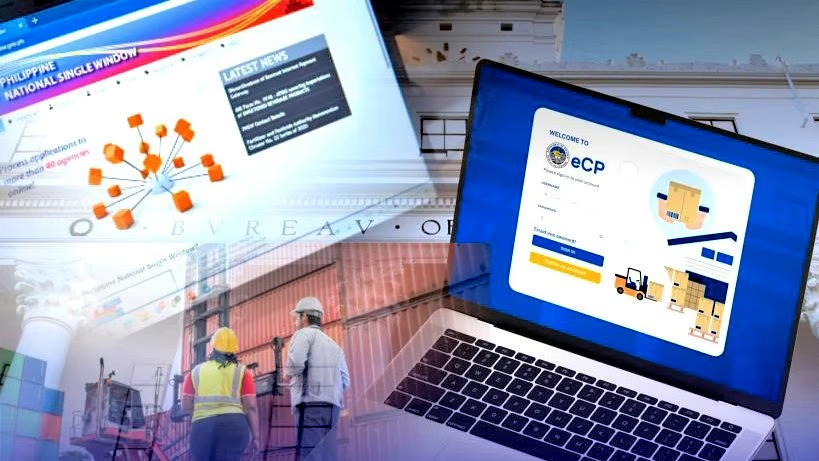
Commissioner Nepomuceno prioritized improving transactions through expanded digital systems.
Under his leadership, the BoC strengthened the Electronic Payment Portal integration with LandBank for secure collection of duties and taxes, the Electronic Certificate of Payment System for faster proof of payment, and the upgraded Online Tax Estimator for clearer and more accurate computation of charges.
The BoC also advanced the Electronic Airway Bill initiative to reduce paperwork and speed up cargo clearance through improved data sharing across the logistics chain.
These improvements are helping reduce delays, enhance transparency, and make Customs services more accessible to traders and the public.
Ease of Doing Business for seamless trade
Commissioner Nepomuceno initiated a series of trade facilitation and ease-of-doing-business reforms for seamless customs processes and improved stakeholder services.
Among his initiatives is the extension of the validity of importer, exporter and broker registrations from one year to three years, removing the need for annual renewals and reducing accreditation costs.
The BoC further cut valuation processing time from five days to three days, helping speed up cargo clearance and reduce delays.
To improve coordination with key stakeholders, the Commissioner ordered the establishment of the Top Importers Office, providing more direct and responsive support to major industry players.
Green Lane QR Code Scanning at airports has been temporarily suspended, following the Commissioner’s directive to simplify clearance procedures for travelers with nothing to declare, while maintaining risk-based inspections for selected passengers.
Securing the country’s border via intensified enforcement
Commissioner Nepomuceno strengthened the BoC’s enforcement efforts, strengthening border protection and public safety.
From July 2025 to June 2026, the bureau carried out 1,090 enforcement and intelligence operations, which led to the seizure of P40.471 billion worth of illicit goods, including illegal drugs, counterfeit products, smuggled cigarettes, vape products and agricultural items.
The BoC also pursued legal action against violators, filing 30 cases against individuals and entities involved in customs fraud, smuggling, and other unlawful importation activities during his first year in office.
Also, the BoC sustained the implementation of the Fuel Marking Program, safeguarding around P257.63 billion in duties and taxes through the monitoring of 20.6 billion liters of fuel.
These efforts were strengthened through closer coordination with partner agencies such as the Philippine Drug Enforcement Agency, Land Transportation Office, the Federation of Philippine Industries and the PHIVIDEC Industrial Authority helping protect legitimate businesses and communities.
Championing integrity, accountability, governance reforms
Commissioner Nepomuceno pursued reforms to strengthen integrity within the BoC and restore public confidence in its operations.
He led the implementation of a stricter Anti-Conflict of Interest Policy, required disclosure of business and family interests, and ensured the full documentation and livestreaming of condemnation activities.
To further strengthen oversight and accountability, he ordered the transfer of the Accounts Management Office (AMO) under the Post-Clearance Audit Group (PCAG) to tighten checks and balances and improve the agency’s capacity to investigate irregularities.
The move also enabled closer monitoring of accreditation applications and more thorough post-audit reviews.
Alongside these structural changes, Commissioner Nepomuceno directed the investigation and reassignment of AMO personnel linked to irregular or corrupt practices.
The BoC also launched the “Isumbong kay Commissioner” platform, giving the public a direct channel to report complaints and irregularities.
Together with stronger internal discipline and anti-corruption efforts, these measures contributed to the BoC’s removal from the list of top complaint agencies and helped rebuild public trust.
Abandoned Balikbayan Boxes delivery, fortifying assistance to OFWs
Reinforcing its commitment to Overseas Filipino workers (OFWs) and their families, the BoC intensified efforts to address long-standing concerns involving abandoned balikbayan boxes.
Commissioner Nepomuceno initiated the establishment of the Balikbayan and OFW Action Center (BOAC), Balikbayan Box Help Desk, and OFW Corner to protect OFW shipments, address balikbayan box concerns, and improve transparency in customs handling.
Recognizing the substantial cost of delivering thousands of abandoned boxes, Commissioner Nepomuceno sought the assistance of President Marcos and the Department of Finance, led by Secretary Frederick Go, to fund their door-to-door delivery.
As of 30 June 2026, the BoC successfully delivered 41,525 balikbayan boxes to their rightful recipients.
To strengthen accountability, the BoC suspended freight forwarders responsible for abandoning balikbayan box shipments from transacting with the Bureau.
Moreover, the BoC assisted affected complainants in filing formal complaints with the National Bureau of Investigation and initiated the filing of eight criminal cases with the Department of Justice against deconsolidators linked to abandoned balikbayan box shipments.
Fostering personnel welfare, public service, social responsibility
Beyond core operations, Commissioner Nepomuceno directed efforts to extend services to communities.
The BoC facilitated the donation of forfeited goods for disaster response, assisted earthquake-affected areas, and expanded healthcare access for personnel.
To sustain reforms, Commissioner Nepomuceno launched the Integrity, Accountability, and Modernization Movement, embedding these values into the daily work of Customs officers while strengthening a culture of professionalism and public service.
Gaining accolades
Commissioner Nepomuceno’s reform agenda also earned widespread recognition from the business community and partner organizations.
During his first year in office, the Bureau received commendations from the Federation of Filipino-Chinese Chambers of Commerce and Industry, Inc., DHL Express, the European Chamber of Commerce of the Philippines, the Cebu Chamber of Commerce and Industry, and the Philippine Chamber of Commerce and Industry, in recognition of the Bureau’s efforts to enhance trade facilitation, streamline customs processes, strengthen border protection, and foster stronger collaboration with stakeholders.
He also received the Golden Peacock Award of Excellence in Government and Humanitarian Service from the Federation of Indian Chambers of Commerce (Phil.) Inc. He was also recognized during the 40th Gintong Parangal Awards for his exemplary public service and honored at the Third International Tobacco Summit for the Bureau’s sustained campaign against illicit tobacco trade and its strengthened border protection initiatives.
The BoC also continued to deepen its partnership with the private sector, securing the support of the FFCCCII and the Chinese-Filipino Business Club Inc. for its modernization initiatives and ongoing customs reforms, underscoring the growing confidence of stakeholders in the agency’s direction under Commissioner Nepomuceno’s leadership.
“Our mandate to serve will not end in our first year,” Nepomuceno said. “This is the promise that we are holding on to. We will continue to protect our borders, keep legitimate trade moving, and safeguard the revenues that support our nation.”
As the BoC enters its second year under Commissioner Nepomuceno’s leadership, he remains focused on sustaining reforms, strengthening enforcement, improving services, and building a Customs system that Filipinos can trust and rely on.


Serving the European-Philippine business community since 1978, the ECCP remains committed to enabling cross-sector collaboration, promoting economic growth, and championing a sustainable future. For inquiries or further information, you may contact us directly or connect with us through our official social media channels.